


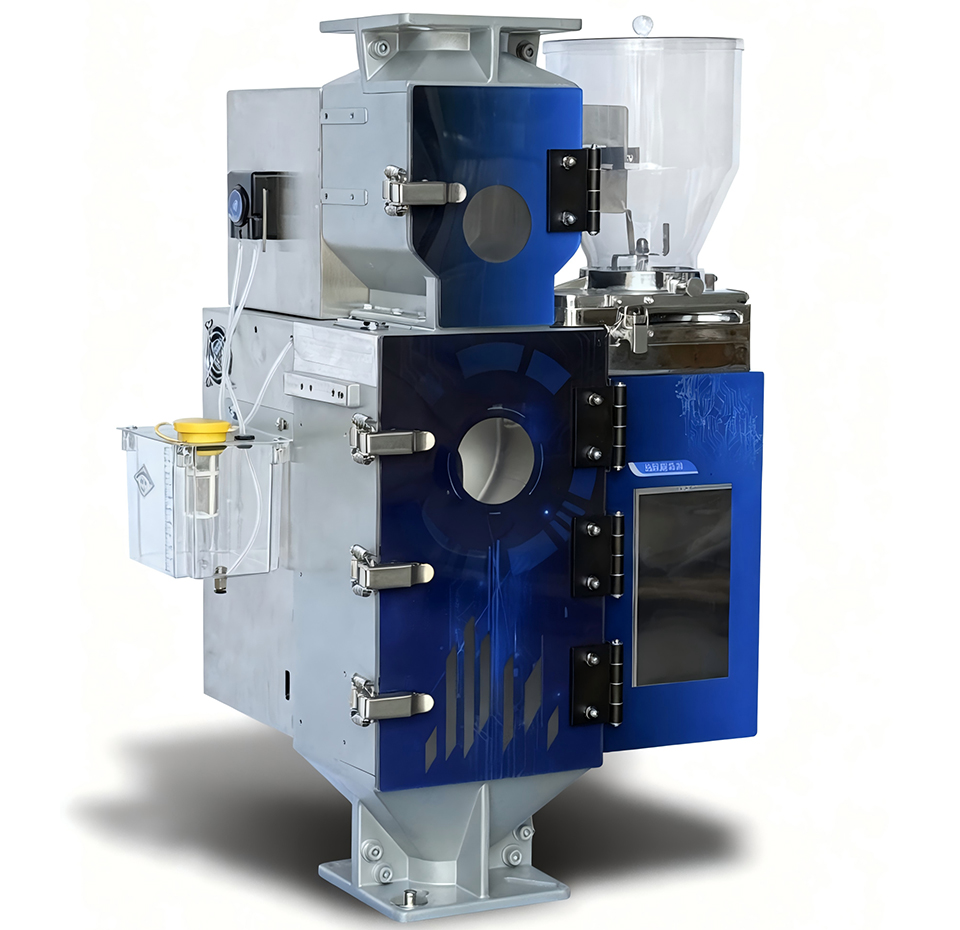
High Precision Color Powder Doser
“Color Powder Machine”,which can be seamlessly integrated with centralized feeding system, central conveying system, automatic material handling system.It provides accurate coloring, stable dosing and dust-free conveying for plastic injection, extrusion and pelletizing lines.
With high-precision weighing sensor, it ensures uniform mixing and color consistency, supports automatic proportioning of multi-component powder and additives. It realizes centralized feeding, automatic conveying, fast color change and fully closed dust-free operation to improve efficiency and reduce labor cost.
Made of stainless steel, easy to clean and maintain. Support intelligent PLC control, connectable to the whole factory centralized feeding system for automated material management.
Characteristics:
1.Modular design: Enables quick color change in 5 minutes;Can be filled with additional materials;Compatible with both pigment and masterbatch, allowing multi-purpose use in one machine.
2.High-speed stirring: Stirring is rapid, uniform, and does not require the addition of oil.
3.Cost and Benefit: Achieve fully automated operation, with stable color;Save materials, labor and money
4.Precise color control: High-precision sensor + intelligent algorithm
5.Measurement accuracy: 0.05G or ≤ 0.5%;Supports up to 500 recipe storage entries
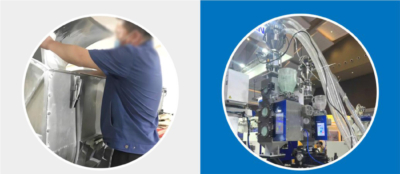
Comparison of advantages and disadvantages between intelligent color powder machine and manual mixing:
| Manual stirring | Intelligent color powder machine | ||
| × | Manual material transfer is time-consuming and labor-intensive, with complicated cleaning procedures and a high risk of production halts due to material issues. | √ | Automated operation, convenient color-changing and cleaning. |
| × | Manual mixing of materials is prone to color variations, uneven color distribution, and the possibility of impurities being mixed in. | √ | The ratio is precise, the color is uniform and consistent, and there are no black spots or color mixing issues. |
| × | High labor costs and the need to invest in auxiliary material costs. | √ | No need to add auxiliary materials, reducing raw material waste. |
| × | Open operation, color powder leakage, polluting the environment and posing health risks. | √ | Fully enclosed design, no dust leakage, ensuring the workshop environment and the health of workers. |
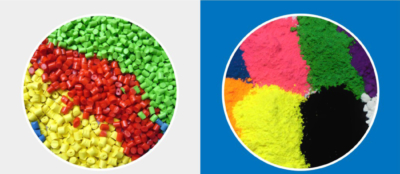
Comparison of the advantages and disadvantages of color powder and masterbatch:
| Color masterbatch | Colored powder | ||
| × | Contains a large amount of calcium carbonate, has poor luster, solid particles, and insufficient blending. | √ | Excellent gloss, strong adhesion, and fully combines with plastic particles |
| × | Heavy/irregular in shape, inaccurate addition, prone to discoloration. | √ | Precisely added, evenly adhered, with consistent color. |
| × | High-temperature extrusion is prone to generating degradation substances and frequent black spots occur. | √ | Normal temperature process, no degradation substances, no black spots. |
| × | Contains filler, subjected to high-temperature shearing, has a significant impact on physical properties . | √ | No fillers, minimal impact, suitable for recycling and reuse. |
| × | The loss rate is high, so a minimum order quantity needs to be set. | √ | Low wastage rate, no minimum order quantity required. |














Reviews
There are no reviews yet.