Many factories struggle with slow and unsafe raw material unloading. Operators often deal with dust leakage, unstable feeding speed, and heavy manual lifting. These issues directly reduce production efficiency.
The Bulk bag unloading equipment from Dongguan NIASI Plastic Machine solves these problems with a controlled and automated unloading process. First, it stabilizes material flow. Then, it reduces operator workload and improves safety. As a result, your production line becomes more continuous and reliable.
This system is widely used in plastic pellet handling, resin unloading, and bulk material feeding applications.
What Is Bulk Bag Unloading Equipment?
The Bulk bag unloading equipment is a system designed to discharge plastic raw materials from ton bags into a hopper or conveying line.
Unlike manual unloading, this system controls the entire discharge process. It prevents sudden material flow and reduces contamination risks.
You can use it for:
- Plastic pellets
- Resin materials
- Granules and powders
In addition, it integrates easily with central feeding systems.
How the System Works
The working process is simple but highly controlled:
- First, an electric hoist lifts the ton bag to the hopper
- Then, the operator fixes the bag mouth to the inlet
- Next, the clamping valve secures the discharge point
- After that, the sealing rope is removed
- Finally, the valve is opened slowly for stable flow
As a result, material enters the system without blockage or leakage.
Key Features of NIASI Bulk Bag Unloading Equipment
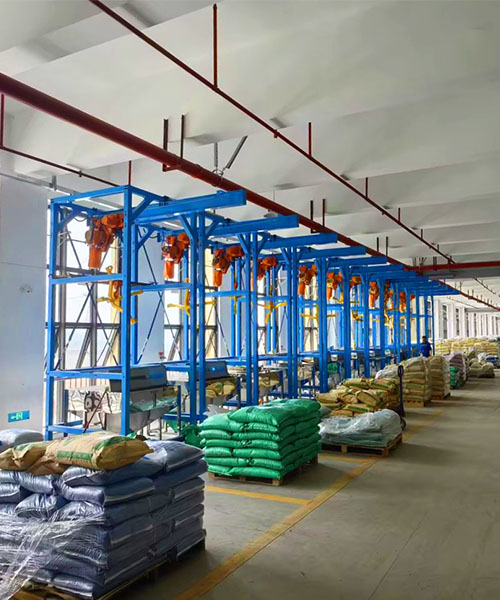
NIASI designs the system for safety, stability, and long-term industrial use.
Main advantages:
- Dual electric hoist system for stable lifting
- Anti-drop hooks that improve operational safety
- Stainless steel hopper for clean material handling
- Adjustable structure for different production layouts
- Optional small bag feeding (25kg input support)
In addition, the system supports both positive and negative pressure conveying.
Performance Comparison
| Item | Manual Unloading | NIASI Bulk Bag Unloading Equipment |
|---|---|---|
| Operation | Labor-intensive | Semi-automatic |
| Safety | Dust exposure risk | Closed handling system |
| Efficiency | Low and unstable | Continuous feeding |
| Material loss | Higher risk | Controlled discharge |
| System integration | Limited | Fully compatible |
Therefore, automation clearly improves both safety and efficiency.
Industrial Applications
The Bulk bag unloading equipment is used in many plastic processing industries.
It is suitable for:
- Injection molding production lines
- Plastic extrusion systems
- Polymer compounding factories
- Packaging material manufacturing
- Automotive plastic parts production
For example, in injection molding plants, the system ensures continuous pellet supply without downtime.
Why NIASI
Dongguan NIASI Plastic Machine has been focused on plastic auxiliary equipment since 2008.
The company provides:
- Central material conveying systems
- Mixing and dosing equipment
- Industrial drying and feeding systems
NIASI equipment is widely used by global manufacturers such as Amcor Group, Berry Global, Dongfeng Honda, and Haier.
In addition, the company follows strict production and inspection standards to ensure stable performance in industrial environments.
FAQ
1. What materials can this system handle?
It is designed for plastic pellets, resin, and granular materials.
2. Can it connect to a silo system?
Yes, it can connect to both positive pressure and vacuum conveying systems.
3. Is customization available?
Yes. NIASI provides customized hopper size, structure, and feeding configuration.
Conclusion
The Bulk bag unloading equipment from NIASI provides a stable and efficient solution for modern plastic material handling. It replaces manual unloading with a safer and more controlled system.
As a result, you can reduce labor cost, improve feeding stability, and keep your production line running continuously.
If you want to upgrade your material handling system, NIASI can design a tailored solution based on your factory layout and production needs.
Contact NIASI to get a customized system proposal today.